
The Truth About Real Female Profiles on Ashley Madison
In the world of discreet dating, the most valuable currency isn’t your subscription fee, it’s trust. For over a decade, the industry giant Ashley Madison has operated under a cloud of suspicion. Following the catastrophic 2015 data breach, the world learned a dark secret: the site had been populated by thousands of “fembots” designed to mimic human interaction and lure men into spending money.
Fast forward to 2026. The company has settled with the FTC, rebranded under Ruby Life, and legally distanced itself from “internal” bots. But for the average man looking for a real connection, the experience remains frustratingly similar. Why? Because while the bots might have evolved, the gender ratio and the “Engager” tactics remain an uphill battle. To succeed in 2026, you must understand the difference between a “legal” site and a “functional” one.
🚨 Quick Verdict
Yes, there are real women on Ashley Madison in 2026 — but they are vastly outnumbered, often inactive, and frequently buried beneath automated messages, canned profiles, and third-party scammers. Most men’s frustration comes not from the absence of real women, but from how difficult the platform makes it to actually reach them.
To understand why real women are so hard to find, it helps to look back at Ashley Madison’s infamous fembot legacy and the events that shaped the platform’s current user landscape.
Table of Contents
Did Ashley Madison Use Fake Female Profiles? (Fembots Explained)
To understand the current state of Ashley Madison, we must look at where they came from. The 2015 hack by “The Impact Team” didn’t just expose user emails; it exposed a systematic infrastructure of fraud.
As reported by The Guardian, the data dump revealed a staggering disparity: while the site claimed over 37 million members, investigators found that the vast majority of female profiles showed zero activity. Analysis from legal experts at Lynch & Owens suggested the ratio was as absurd as 11 million men to as few as 2,000 active women.
Fortune later detailed how the company utilized “chatbots”—internal scripts—to bridge this gap. These “fembots” would send millions of fake messages to men to trigger a “reply” which cost real money. By 2016, the company faced a massive FTC probe. According to Reuters, this investigation led to a significant settlement after the FTC proved that the site had deceived users with these “engager profiles.” While the company legally moved away from creating new internal bots to comply with federal oversight, the void left by those bots created the modern landscape of “Sneaky Automation.”
Note: The fembot scandal was only the tip of the iceberg. For a complete deep-dive into the site’s history and current operational mechanics, see our comprehensive Ultimate Ashley Madison Guide
Ashley Madison Gender Ratio in 2026 (Why Real Women Are Hard to Find)
The Data Gap: Why the Math Doesn’t Add Up in 2026
To understand why your experience on Ashley Madison might feel like shouting into a void, you have to look at the hard numbers. According to recent traffic analysis from Similarweb, there is a massive disconnect between the site’s marketing and the actual user reality.
- Gender Imbalance: The current audience composition is 76.01% Male and only 23.99% Female.
- The Age Anomaly: The largest visitor group (over 22%) falls into the 25–34 age bracket.
Sasha’s PhD Perspective: The “Married” Myth
As a Clinical Psychologist, these numbers tell a story that the platform’s “married dating” branding hides. In the study of relationships, the peak years for seeking outside connection usually fall in the 38–55 range (often following the “seven-year itch” or mid-life transitions).
The fact that the 25–34 group is the largest is highly suspect. People in this age group are statistically less likely to be in the long-term, stagnant marriages that lead to discreet seeking. This data suggests that a huge portion of the “female” traffic isn’t bored housewives—it’s more likely a mix of professional “Sugar” seekers, promotional accounts, or the automated engagement profiles we discussed earlier.
Gender Distribution
Source: Similarweb 2026 Traffic Analysis
User Age Groups
💡 Master the Platform: Understanding the skewed ratios is just the beginning. If you want to see the full breakdown of how to navigate these digital waters without losing your shirt, check out our Ultimate Ashley Madison Guide.
What Are “Canned” Profiles on Ashley Madison?

If the site isn’t using “fembots” in the traditional sense, why does it still feel so populated? The answer lies in Canned Profiles.
Not every fake profile is a bot. Many are “canned”—real data and photos from women who haven’t logged in for years. In other cases, they are profiles created by staff using stock images just to “fill up” search results in smaller cities where the female population is zero.
- The Goal: To make the site look populated.
- The Result: You see a beautiful woman “nearby,” you spend 9 credits to message her, but the message sits in an inbox that hasn’t been opened since 2019. It isn’t a “bot” replying; it’s just a dead-end profile designed to eat your credits.
Why You’re Getting Messages From Women Who Never Wrote You
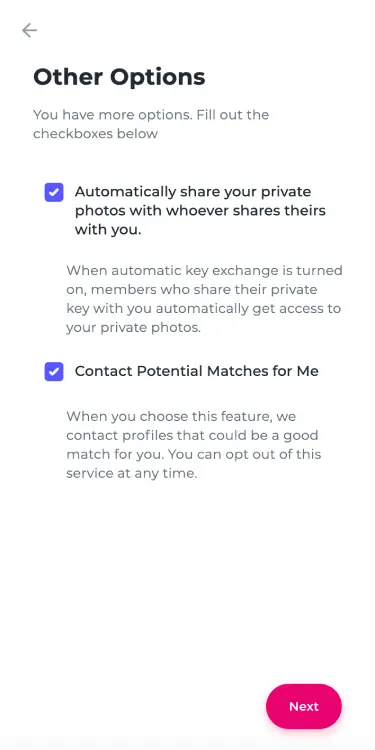
This is the most deceptive tactic used in 2026. When a real woman joins the site, she is often automatically opted-in to a feature that sends messages to nearby men on her behalf. This is done via a pre-selected box called “Contact potential matches for me.”
- The Scenario: You get a message: “I saw your profile and loved it! Want to chat?”
- The Reality: The woman did not write that. The system sent it while she was offline.
- The Frustration: When you pay to reply, she might not log back in for days. By the time she does, she has 100 replies to a message she didn’t even know she sent. Overwhelmed, she ghosts almost all of them.
Fake Profiles on Ashley Madison: How to Spot Them Fast
In 2026, the fraud on Ashley Madison has become laughably obvious to the trained eye, yet it remains dangerously effective for the platform’s bottom line. If you spend more than five minutes browsing, you will notice glaring errors that should, in theory, be caught by any basic security filter.
The Identity Mismatch
It is common to find profiles where the data clearly contradicts the imagery. For example, a profile may list its ethnicity as “African American” or “Asian,” yet the photos are of a clearly Caucasian woman. This isn’t just a typo; it is a hallmark of “Bulk Profile Generation.” International scam farms haphazardly slap stolen data and stolen photos together to create thousands of accounts at once.
The Celebrity and “Pornstar” Bait
Because the site is a “high-ticket” environment, it is a magnet for “Bait Profiles.” You will frequently see profiles using high-resolution, professional photos of well-known adult film stars (see example of adult film star Sasha Grey being used in a Ashley Madison profile below), Instagram influencers, or B-list celebrities.

Passive vs. Active Fraud: The Legal Loophole
This is where the “Sneaky Automation” gets dark. While the FTC settlement legally bars Ashley Madison from creating internal fembots, the company has zero financial incentive to aggressively remove these third-party scammers.
By allowing these “Visual Fraud” accounts to remain active, the platform benefits from a free labor force. These external scammers provide the “high-end” imagery that keeps men engaged and buying credits. Ashley Madison knows that a certain percentage of fraud is actually beneficial to their conversion rate. Even if the woman isn’t real, the hope that she might be is what keeps the credits flowing. They aren’t “creating” the bots anymore—they are simply hosting a playground for them and taking a cut of the profit.
📢 Insider Spotlight
To understand why your experience on Ashley Madison feels like an uphill battle, you have to look at what happens behind the scenes. We spoke with a former contractor who worked at the Ruby Life (formerly Avid Life) headquarters in Toronto.
They revealed that despite the rebrand, the priority hasn’t changed. The internal culture focuses on extracting money from male users via sneaky ‘Member Initiated Contact’ (MIC) rebills and systems designed to trick women into mass-messaging men. It feels like the company is doing everything to extract money rather than actually acquiring real women and building a genuine user experience. They’ve just gotten better at hiding the old Avid Life tactics under a new brand name.
From sneaky ‘Member Initiated Contact’ (MIC) rebills to systems designed to trick women into mass-messaging men, it’s clear the priority hasn’t changed. It feels like the company is doing everything to extract money from male users rather than actually acquiring real women and building a genuine user experience. They’ve just gotten better at hiding the old Avid Life tactics under a new brand name
Third-Party Scammers and “High-Ticket” Threats
Since Ashley Madison is a “high-ticket” site, it is a magnet for professional scammers. These aren’t run by the site, but they are rampant:
- “OnlyFans” Promoters: Women who interact just enough to get you to follow a link to their paid content.
- Blackmailers: Users who immediately try to move you to WhatsApp or Telegram to record a “sexy” video call and then extort you.
Sasha’s Tip: If a woman messages you but hasn’t viewed your profile, it is an automated “system message.” Do not spend credits replying. A real woman looking for a discreet affair will almost always view your profile at least once before engaging.
Why Sasha7 is Different: The $500,000 Investment
To understand why the ratio on Ashley Madison feels so difficult, you have to look at their marketing strategy. Most affair sites market to men through adult sites and tech blogs, which only worsens the gender imbalance.
Sasha7 took the opposite approach. We recognized that to build a real community, we had to go where women actually are.
- The Campaign: In late 2025 and early 2026, Sasha7 invested over $500,000 on high-end marketing in magazines like Cosmopolitan, Elle, and Women’s Health.
- The Result: This campaign alone brought in 18,000 verified female sign-ups in a single week.
Ashley Madison struggles to keep up with this kind of “real-world” influx of women, which is why they are forced to rely on the “Engager” tactics we break down below. At Sasha7, we don’t need bots because we actually went to the source.
Protecting Yourself: The “PhD” Defense Strategy
As a Clinical Psychologist specializing in relationships, I advise my clients to look for Human Behavior, not Platform Lures.
- Look for Specificity: If a profile has a bio that mentions specific local landmarks or personal hobbies, it is less likely to be a “canned” profile.
- The View Count: Always check if they have viewed you. If they haven’t, and they are messaging you, it’s a system script.
- The Speed of Escalation: Real women seeking an affair are usually nervous and careful. If a profile is “hyper-sexual” within seconds, it’s likely a scammer.
Conclusion: Choose Reality Over Algorithms
The 2026 dating landscape is full of traps, but you don’t have to be a victim. While sites like Ashley Madison continue to struggle with a 76% male audience and reliance on “Engager” tactics, Sasha7 has proven that by investing in real women through high-end media like Cosmo and Elle, you can create a balanced, successful environment.
Stop fighting the 10:1 ratio and start engaging with a community that values your time, your privacy, and your money.
Finding real women is getting even harder now that the platform is pivoting to a “general” audience. Check out our analysis on how the new Ashley Madison rebrand dilutes the dating pool by mixing in a massive influx of single users.
Frequently Asked Questions About Real Women on Ashley Madison
Are there actually real women on Ashley Madison in 2026?
Yes—but finding them isn’t easy. Real women exist on the platform, yet they’re heavily outnumbered by male users, hidden beneath automated messages, inactive accounts, and third-party scammers. According to a 2015 Washington Post report, a significant portion of female profiles were inactive or possibly fake, showing that this challenge isn’t new. Knowing how to spot active profiles is key to connecting.
What exactly are fembots, and how do they affect Ashley Madison?
Fembots are automated female profiles that simulate real conversations to get men to spend credits. Ashley Madison no longer officially creates these bots, but automated engagement still impacts the site, making genuine connections harder to find. KrebsOnSecurity highlighted that the 2015 data breach exposed these practices, revealing how deeply bots were embedded in the platform.
How can I tell if an Ashley Madison profile is fake or inactive?
Watch for generic bios, photos that don’t match profile details, and messages sent automatically while the user is offline. Real women tend to engage gradually, respond naturally, and show specific personal details in their profiles. The presence of canned or stock-image accounts is a continuing feature, according to both the BBC and FTC reports.
Why do so many men struggle to reach real women on Ashley Madison?
The platform’s skewed gender ratio (roughly 76% male vs 24% female) makes competition fierce. Add automated messaging, “canned” profiles, and third-party scammers, and connecting with an actual woman can feel like searching for a needle in a haystack. Legal settlements, such as the $11.2M class-action lawsuit in 2016, indicate that this imbalance has been a longstanding problem.
Is there a better alternative to Ashley Madison for finding real women?
Yes—sites like Sasha7 focus on attracting real women through verified profiles and high-quality marketing, making genuine connections far easier without relying on bots or automated engagement.
📚 Expand Your Knowledge: The Sasha7 Research Library
If you are still deciding if Ashley Madison is the right move for your situation, explore our in-depth regional reports and personal case studies:
- The Global Review: Is it worth it? Our Comprehensive 2026 Ashley Madison Review
- A Personal Journey: My Ashley Madison Experience: A Start-to-Finish Case Study
- Regional Spotlight (Australia): Is the Ratio Better Down Under? My Experience on Ashley Madison Australia
- Regional Spotlight (Brazil): Melhor Alternativa ao Ashley Madison em São Paulo
Explore More Ashley Madison Insights:
If you want the full picture, check out our other detailed guides:
- Ashley Madison Review — The site’s features, pros, and cons broken down.
- My Ashley Madison Experience from Start to Finish 2024 — A real-world walkthrough of using the platform.
- Ashley Madison Cost & Credits Guide — How credits, subscriptions, and hidden fees add up.
- My Experience on Ashley Madison Australia — Country-specific pricing and experience insights.
- Discover the #1 Ashley Madison Alternative — A head to head comparison of Ashley Madison vs Sasha7
- Ashley Madison Brazil — The complete guide on how the site works specifically for the Brazilian audience.